 MSense
 Accessible introductions to what we study — the ideas behind our research on time, attention, and perception, explained for everyone. No jargon required, just curiosity.
Curious Minds

Curious Minds
Where the last interval lingers: the putamen and duration serial dependence
Si Cheng’s fMRI study in NeuroImage: Reports finds that the previous interval lingers in the putamen, not visual cortex, when people reproduce durations, and that task switching recruits …
Oct 5, 2026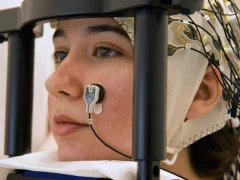
Curious Minds
The Attentional Thief: Why an Hour of Scrolling Feels Like Half
In a stripped-down lab feed with EEG and eye tracking, a 60-second block of self-paced scrolling felt like 28 seconds, shorter than watching the same images replayed, yet memory for them was no …
Jun 24, 2026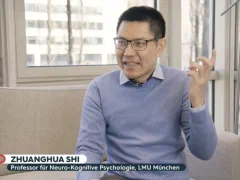
Curious Minds
Your phone steals time twice
Featured on 3sat nano, our preliminary results show that actively browsing short videos shrinks felt time far more than passively watching them, and that scrolling leaves memories too blurred to …
Mar 29, 2026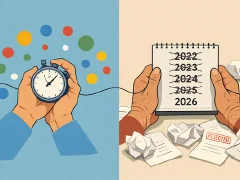
Curious Minds
Duration Reproduction Under Editorial Pressure
A paper rejected by JEP:LMC after three rounds and a demanded replication, then published in Cognition: Zhuanghua Shi reflects on what the publication system costs its authors, above all PhD students.
Feb 27, 2026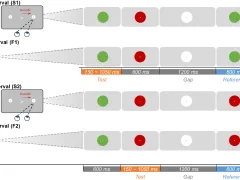
Curious Minds
How does saccade distort the time we experience?
Lingyue Chen’s study in Psychological Research shows that a saccade not only stretches the first event seen afterwards but also compresses the next one, a tug-of-war that intensifies the …
Apr 24, 2025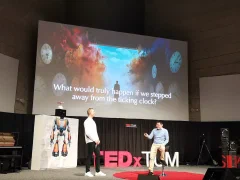
Curious Minds
TEDx talk on decisions under time pressure
At TEDxTUM, Zhuanghua Shi explained how hidden time cues push us into snap decisions that scammers exploit, and how slowing down leads to more deliberate choices.
Dec 26, 2024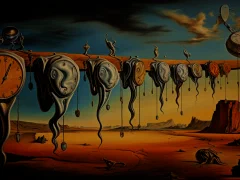
Curious Minds
New insights into Vierordt’s law: A talk by Prof. John Wearden
Prof. John Wearden came to Munich to revisit Vierordt’s Law, weighing internal-clock and contextual accounts of why we overestimate short intervals and underestimate long ones, and argued that …
Apr 8, 2024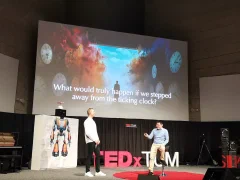
Curious Minds
TEDxTUM talk on “Hidden time cues shape our decisions”
Zhuanghua Shi took the TEDxTUM stage at Simple Complexity on Nov. 4th to show how hidden time cues quietly steer everyday choices and how we can learn to spot and master them.
Nov 5, 2023
Curious Minds
Eye movement: innovation in visual perception training
Training vision while the eyes move lets perceptual learning spread beyond the trained spot to untrained parts of the visual field, LMU Newsroom reports on the PNAS study by Grzeczkowski, Shi, Rolfs …
Oct 24, 2023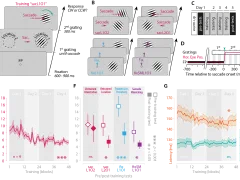
Curious Minds
Feng Meng, can the ability to see a flea as large as a wheel be transferred?
Lukasz Grzeczkowski shows in PNAS that perceptual learning transfers to a new location when the eyes saccade there, though not to a new feature, told through the Chinese myth of archer Feng Meng.
Oct 16, 2023Curious Minds
The 150-Year-Old Mistake That Taught Us How the Brain Keeps Time
Karl von Vierordt thought he had found a law of time perception. Glasauer and Shi show his random interval order created the distortion, which nearly vanishes when durations drift as a random walk.
Aug 28, 2021