About Us
We are a research group in the Department of Psychology at LMU Munich, studying how the brain makes sense of time, attention, and uncertainty. Our work spans three questions. How does the brain construct the experience of time — and why does it sometimes get it wrong? How do we learn to focus on what matters and ignore what doesn’t? And how does the brain combine prior knowledge with new evidence to form perceptual beliefs?
We approach these questions through behavioral experiments, neuroimaging, and computational modeling — often combining all three. Our team brings together perspectives from experimental psychology, neuroscience, and computational science. If you’re new here, explore our research topics or browse Curious Minds for accessible introductions to what we study.
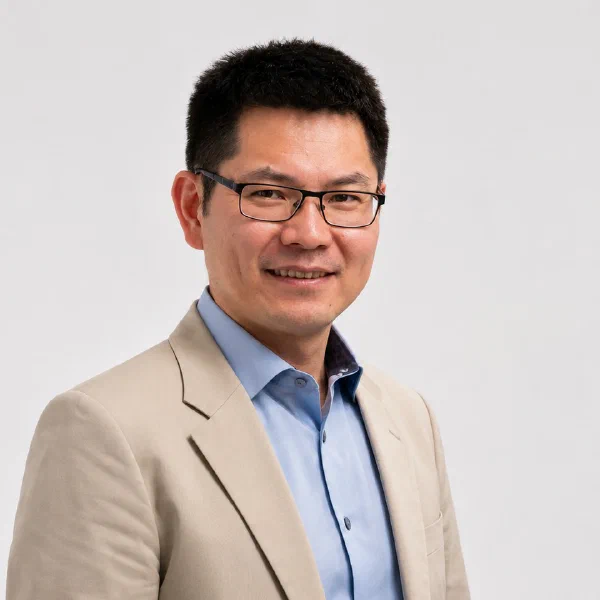
Zhuanghua Shi (施壮华)
Professor
Prof. Dr. Zhuanghua Shi leads the MSense lab at the Chair of Neuro-Cognitive Psychology, LMU Munich. His research investigates how the brain makes sense of time, space, and uncertainty, how contextual regularities and prior expectations shape attention, and how Bayesian inference underlies perceptual decision-making. The lab combines psychophysics, EEG, fMRI, and computational modeling to study these questions. He is also affiliated with the Graduate School of Systemic Neurosciences (GSN) and the Neuroimaging Core Unit Munich (NICUM).
Research interests: Time Perception, Multisensory Perception, Context Guidance and Suppression, Visual Attention
Current Members
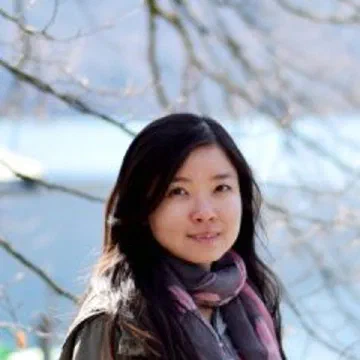
Siyi Chen (陈思佚)PostdocBio
Siyi Chen became a member of the lab team in late 2018, focusing on the crossmodal contextual learning project. In 2022, she was awarded funding for her independent research project from the German Research Foundation (DFG), which explores the impact of uncertainty on context guidance and suppression mechanisms. She currently holds the position of Junior Researcher in Residence (Center for Advanced Studies) at LMU (2023/24).
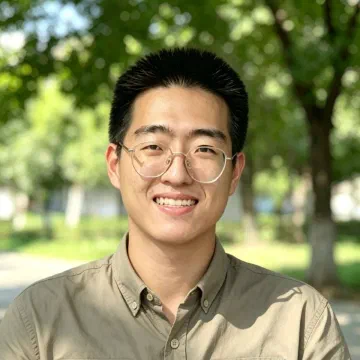
Chunyu Qu (曲春宇)PhD CandidateBio
Chunyu joined the MSense Lab in 2025 after completing his master’s degree at the Technical University of Munich (TUM). His research focuses on how the human brain integrates past and present information in dynamic and uncertain environments, aiming to understand the continuity mechanisms linking perception, memory, and decision-making. He combines behavioral experiments, functional magnetic resonance imaging (fMRI), and computational modeling, including Bayesian inference and variational autoencoder (VAE) algorithms, to characterize the coupling between trial-by-trial belief updating and neural dynamics. His broader interests include neurocognitive modeling, multisensory integration, and brain–computer interface (BCI) systems.
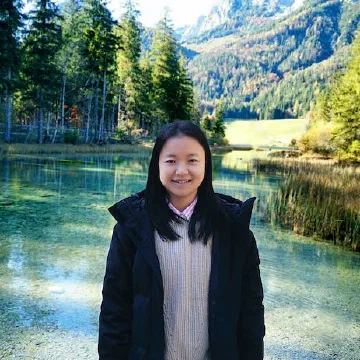
Jiao Wu (吴娇)PhD CandidateBio
Jiao Wu (MSc.)studied psychology at Peking University and joined the lab in 2021. She is interested in the organization of context-based prior formation in time perception.
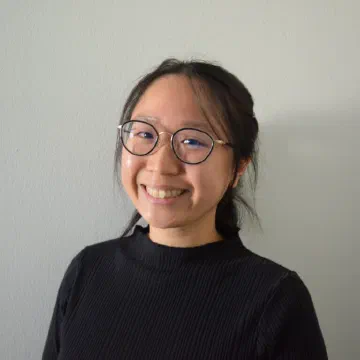
Yun-Wai FooPhD CandidateBio
Yun-Wai Foo (MSc.)studied neuroscience at GSN/LMU and joined the [Nevia Lab](https://nevialab.com/) and MSense lab in 2021. She is interested in predictive coding theories in the field of neurodevelopmental disorders and social interactions.
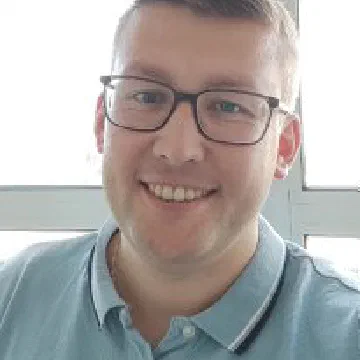
Artyom ZinchenkoPrivat Dozent (associated)Bio
Artyom Zinchenko graduated from Max-Planck Institute for Human Cognitive and Brain Sciences (Leipzig) in 2018. His PhD work explored the role of emotions in cognitive and affective control, using EEG and dynamic, multisensory environment. Artyom is now a postdoc working together with Prof. Thomas Geyer, Prof. Markus Conci and Prof. Zhuanghua Shi. He is interested in the role of affective information and environmental regularities in contextual cueing and its neural basis. To explore these questions, Artyom uses EEG, TMS, VR, eye tracking, skin conductance, heart rate, and patient case-study research methods.
Alumni
- Fredrik Allenmark (Stockholm, Sweden)
- Si Cheng (University of Texas Southwestern Medical Center)
- Hao Yu (Peking University)
- Shao-Yang Tsai (Rotman Research Institute, Baycrest)
- Yannan Su (Alpine Institute)
- Lingyue Chen (Darmstadt University)
- Nan Qiu (Chengdu Brain Science Institute)
- Cemre Baykan (University of Marburg)
- Jan Nasemann
- Leonardo Assumpção
- Xiuna Zhu
- Bing Li (Yanan University)
- Miloš Stanković (University of Vienna)
- Zhang, Bei (Shanghai Jiatong University)
- Grzeczkowski, Łukasz
- Yue, Ren (Rotman Research Institute, Baycrest)
- Xuelian Zang (Hangzhou Normal University, China)
- Chen, Lihan (Peking University, China)
- Ganzenmüller, Stephanie
- Jia, Lina (Jiangnan University, China)
- Rank, Markus (Hilti group)
- Zou, Heng
 MSense